
Year Established
1960
Record (All Time)
482-529-6 (47.7%)
Superbowls
2
Record (Salary Cap Era)
248-269 (48.0%)
Winning Seasons (Salary Cap Era)
13 (40.6%)
Playoff Apps (Salary Cap Era)
10 (31.3%)
Point Diff (Salary Cap Era)
-647

Seasons
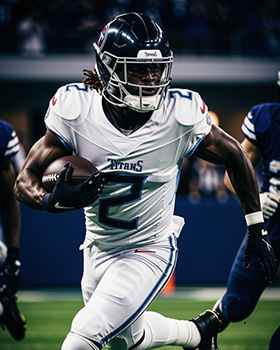

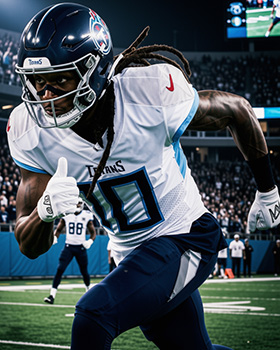
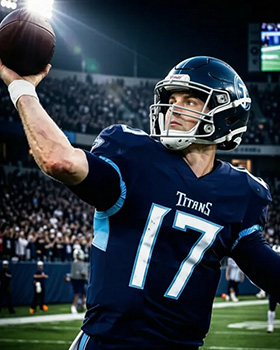
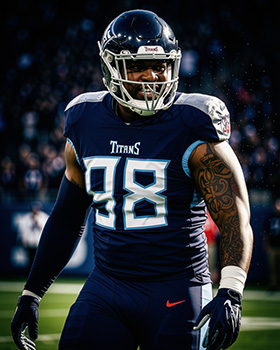

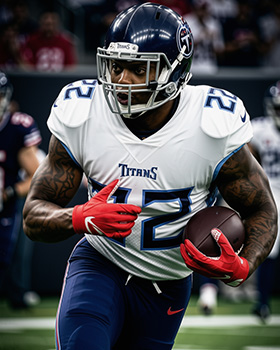

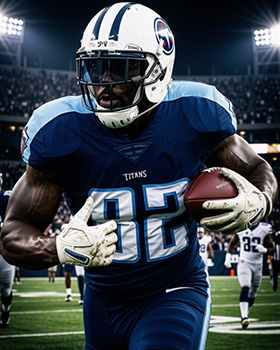
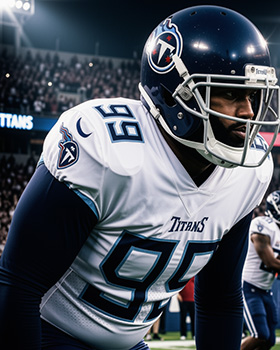

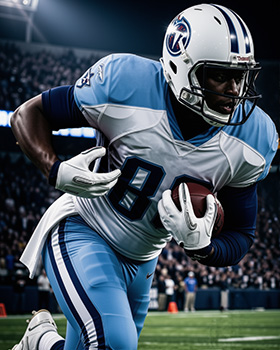
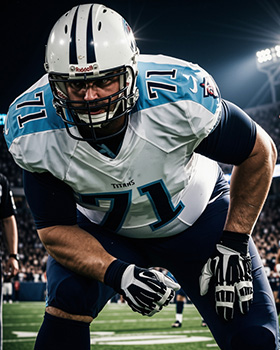
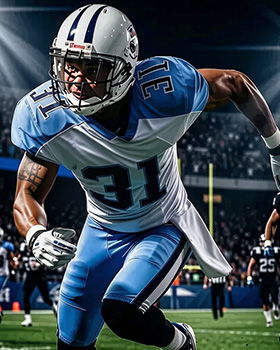
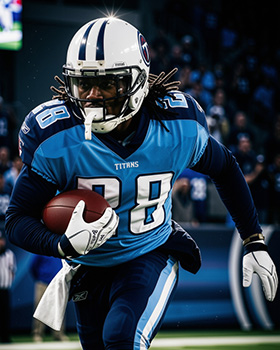
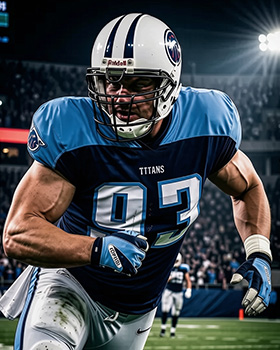
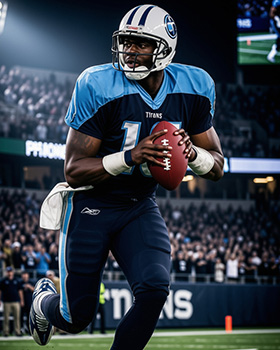
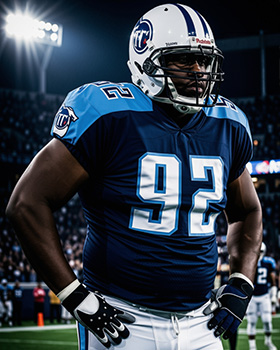
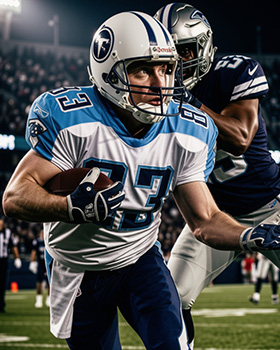
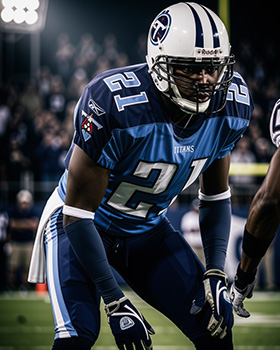
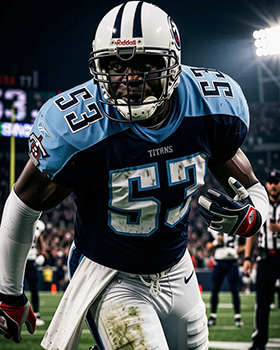
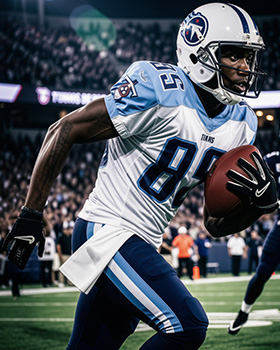
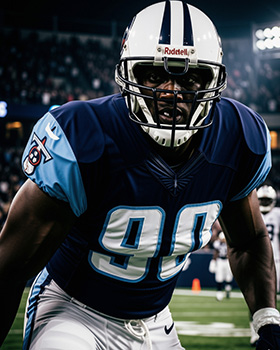
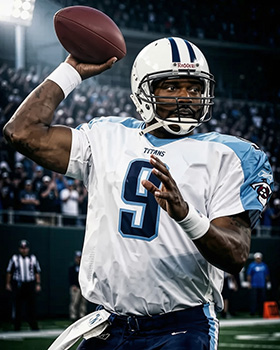

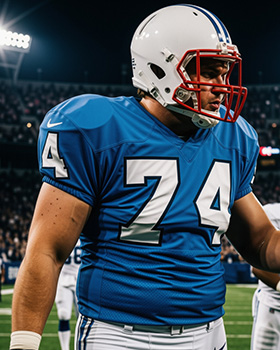
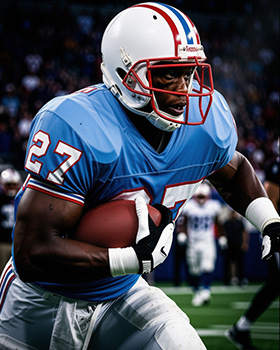
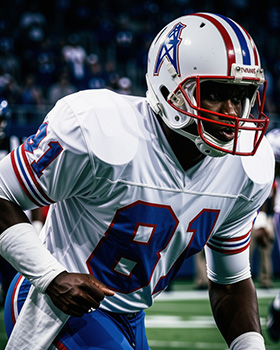

Tennessee Titans Franchise History
Few franchises in professional football carry a duality quite like the Houston Oilers turned Tennessee Titans. Born in the wild-west ethos of Bud Adams’s AFL in 1960, this franchise’s DNA was forged in Texas oil fields before taking root on the banks of the Cumberland River. Across both geographic eras, the team’s identity has been rooted in an unapologetic, blue-collar physicality - a stubborn refusal to finesse their way to victory when a slugfest is on offer. From the suffocating humidity of the Astrodome to the turf of Nashville, they have operated as an underdog contradiction: a franchise defined by fan spirit and a relentless desire to punish opponents at the line of scrimmage.
The peaks of this franchise represent distinct, iconic eras of offensive innovation and physical dominance. Early on, quarterback George Blanda launched the Oilers to consecutive AFL championships in 1960 and 1961. Two decades later, head coach Bum Phillips ignited the 'Luv Ya Blue' movement behind the earth-shattering running style of Earl Campbell, whose punishing downhill bursts personified late-1970s football. In the late 1980s and early 1990s, the franchise pivoted entirely, unleashing Warren Moon to pilot the fast-break 'Run 'n' Shoot' offense that dismantled AFC defenses. By 1999, rebranded as the Titans, coach Jeff Fisher paired quarterback Steve McNair’s warrior toughness with Eddie George’s power running to lead the team to an electrifying run to Super Bowl XXXIV.
Yet for all their high-water marks, heartbreak and identity shifts are stitched into the franchise's fabric. The Oilers suffered the most agonizing postseason collapse in NFL history during the 1992 wild-card round, surrendering a 32-point lead to the Buffalo Bills. Franchise relocation in 1997 fractured their relationship with Houston, forcing a temporary two-year liminal state as the Tennessee Oilers before establishing permanent roots in Nashville. Even their closest brush with modern immortality ended in tragic fashion, coming up exactly one yard short of a game-tying touchdown as time expired in Super Bowl XXXIV.
Today, the franchise occupies a unique role in football lore as a dual-heritage survivor. Through modern iterations anchored by power rushers like Derrick Henry and defensive cornerstones like Jeffery Simmons, the Titans remain tethered to their founding ethos. They exist as a bridge between the swagger of pioneer AFL oilmen and the stubborn, ground-and-pound culture of Tennessee. Unafraid of dirtying the jersey, the Oilers-Titans legacy is defined not by clean, easy dynasty runs, but by an enduring commitment to physical confrontation and an unyielding refusal to go down quietly.

Titans All-Time Stats Leaders
From offensive production to defensive dominance, the Titans record books are led by players such as Warren Moon, Eddie George, Ernest Givins, Ray Childress, Elvin Bethea, and Jim Norton.
Titans Through the Eras
Trace the Titans journey and performance from the start of the salary cap era to the modern day, highlighted by the careers of coaches like Mularkey and Fisher.
Titans Team Wins by Season
Titans Head Coaching Records
Titans Performance Trends
Trace the evolution of the Titans football DNA through scoring trends, offensive and defensive ranks and efficiency and pass-run tendencies across every season from the salary cap era to today.
Titans Scoring Profile and Points Margins
Titans Offensive and Defensive Yardage Rankings
Titans Offensive and Defensive Efficiency
Titans Offensive Identity
Pass vs Rush Tendency