
Year Established
2002
Record (All Time)
174-214-1 (44.9%)
Superbowls
0
Record (Salary Cap Era)
174-214-1 (44.9%)
Winning Seasons (Salary Cap Era)
11 (45.8%)
Playoff Apps (Salary Cap Era)
9 (37.5%)
Point Diff (Salary Cap Era)
-774

Seasons
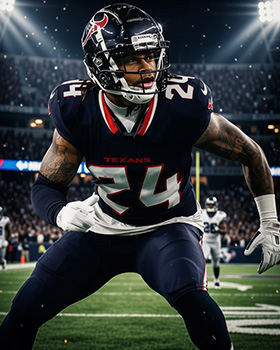
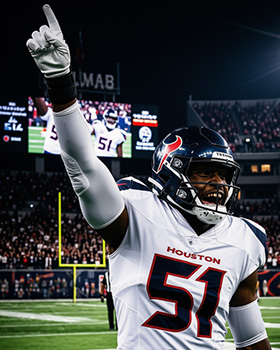
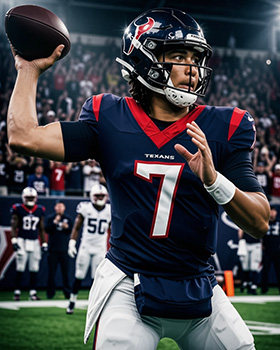
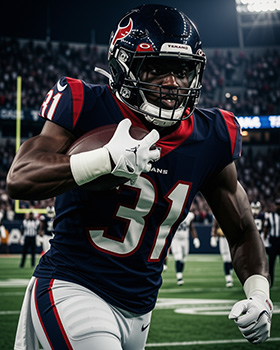
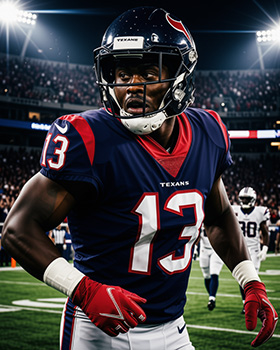
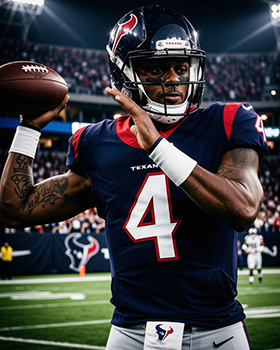
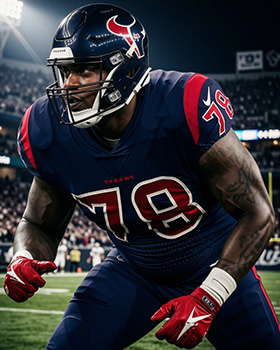
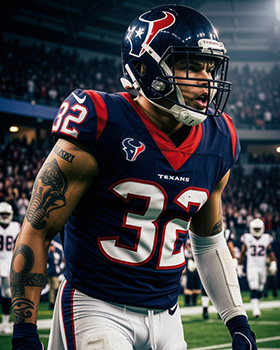
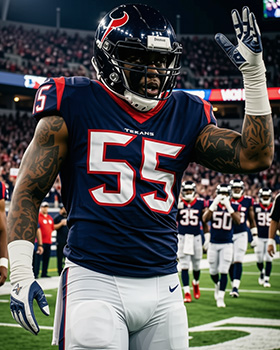
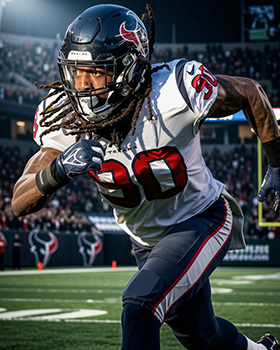
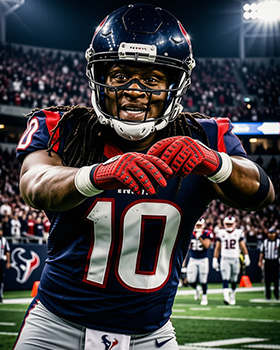
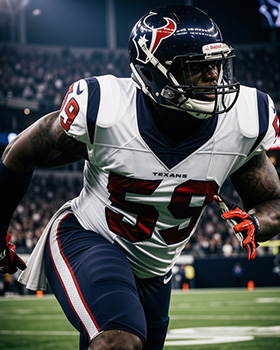
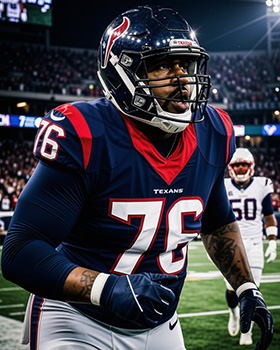
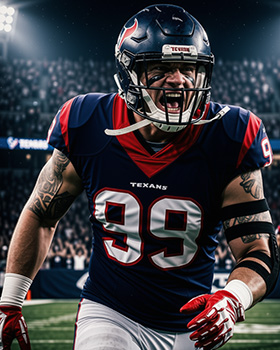
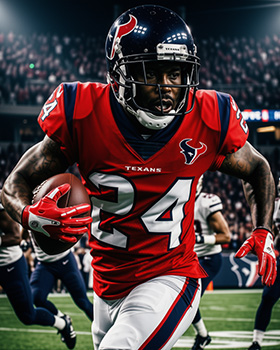
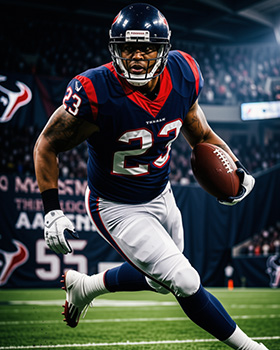
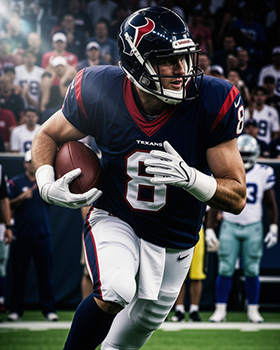
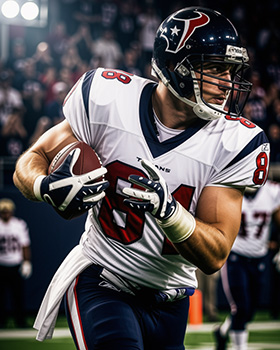
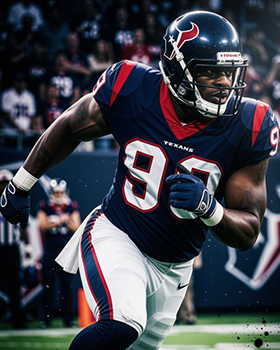
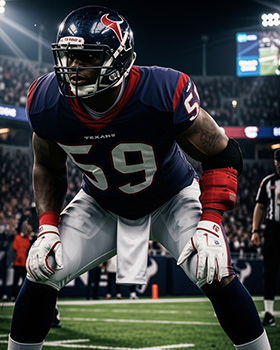
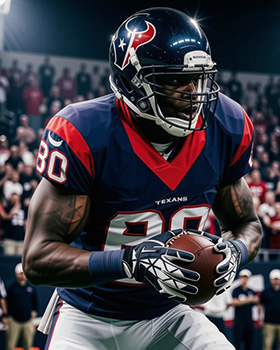
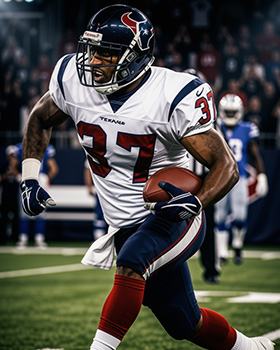
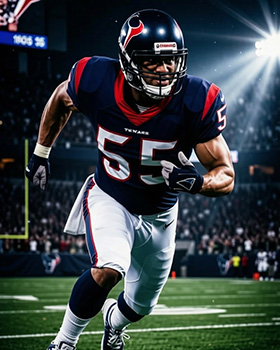
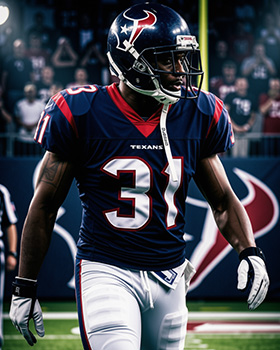
Houston Texans Franchise History
Born out of the ashes of the Houston Oilers’ abrupt departure to Tennessee, the Houston Texans entered the NFL in 2002 as the league’s 32nd franchise with a distinct mandate: reclaim the football soul of a spurned, obsessed Texas market. The DNA of this franchise is rooted in a blue-collar defensive ethos combined with a persistent thirst for validation. Unlike legacy teams that inherited multi-generational fan bases, the Texans had to build an identity from scratch under founding owner Bob McNair. They forged a culture around grit, powerhouse individual anchors, and a stadium environment that demanded a team mirroring the hard-hat, energy-sector resilience of Houston itself.
The franchise hit its first peak in the early 2010s under head coach Gary Kubiak, mastering a zone-stretch running game spearheaded by Arian Foster and a play-action attack orchestrated by Matt Schaub. This offensive synergy opened the door for a historic defensive era, as J.J. Watt terrorized opposing quarterbacks to rewrite the blueprint for modern defensive linemen, balanced by the reliable excellence of wide receiver Andre Johnson. A decade later, the franchise captured lightning again under head coach DeMeco Ryans and quarterback C.J. Stroud. This contemporary era synthesized a highly efficient West Coast passing game with an aggressive 4-3 defense, yielding immediate division titles and fundamentally altering the franchise's ceiling.
However, the path to stability was paved with trauma. The franchise’s infancy was a brutal lesson in expansion hazards, symbolized by quarterback David Carr taking a historic shellacking behind a porous offensive line. For years, the Texans repeatedly slammed into a hard ceiling, earning a frustrating reputation for divisional-round exits and regular-season promises that evaporated in January. The rock bottom arrived with the collapse of the late Bill O’Brien era, followed by the highly publicized off-field issues with Deshaun Watson. These compounding crises stripped the roster to its studs and left the franchise looking like a textbook tale of organizational dysfunction.
The modern landscape of the NFL views the Texans not as a scarred expansion afterthought, but as the premier blueprint for rapid, clinical reconstruction. By pairing Ryans, a former Texans linebacker who embodies the club’s defensive roots, with Stroud, an elite young signal-caller, Houston has finally shed the ghost of the Oilers. They now occupy a pivotal space in the AFC hierarchy as a perennial heavyweight. No longer just happy to have professional football back in the Bayou City, the Texans have established a legacy of resilience, evolving from an expansion experiment into a powerhouse that often dictates the terms of the modern game.

Texans All-Time Stats Leaders
From offensive production to defensive dominance, the Texans record books are led by players such as Matt Schaub, Arian Foster, Andre Johnson, DeMeco Ryans, J.J. Watt, and Johnathan Joseph.
Texans Through the Eras
Trace the Texans journey and performance from the start of the salary cap era to the modern day, highlighted by the careers of coaches like Ryans and OBrien.
Texans Team Wins by Season
Texans Head Coaching Records
Texans Performance Trends
Trace the evolution of the Texans football DNA through scoring trends, offensive and defensive ranks and efficiency and pass-run tendencies across every season from the salary cap era to today.
Texans Scoring Profile and Points Margins
Texans Offensive and Defensive Yardage Rankings
Texans Offensive and Defensive Efficiency
Texans Offensive Identity
Pass vs Rush Tendency